Copper Mosaic IPA: My Latest Homebrewing Adventure
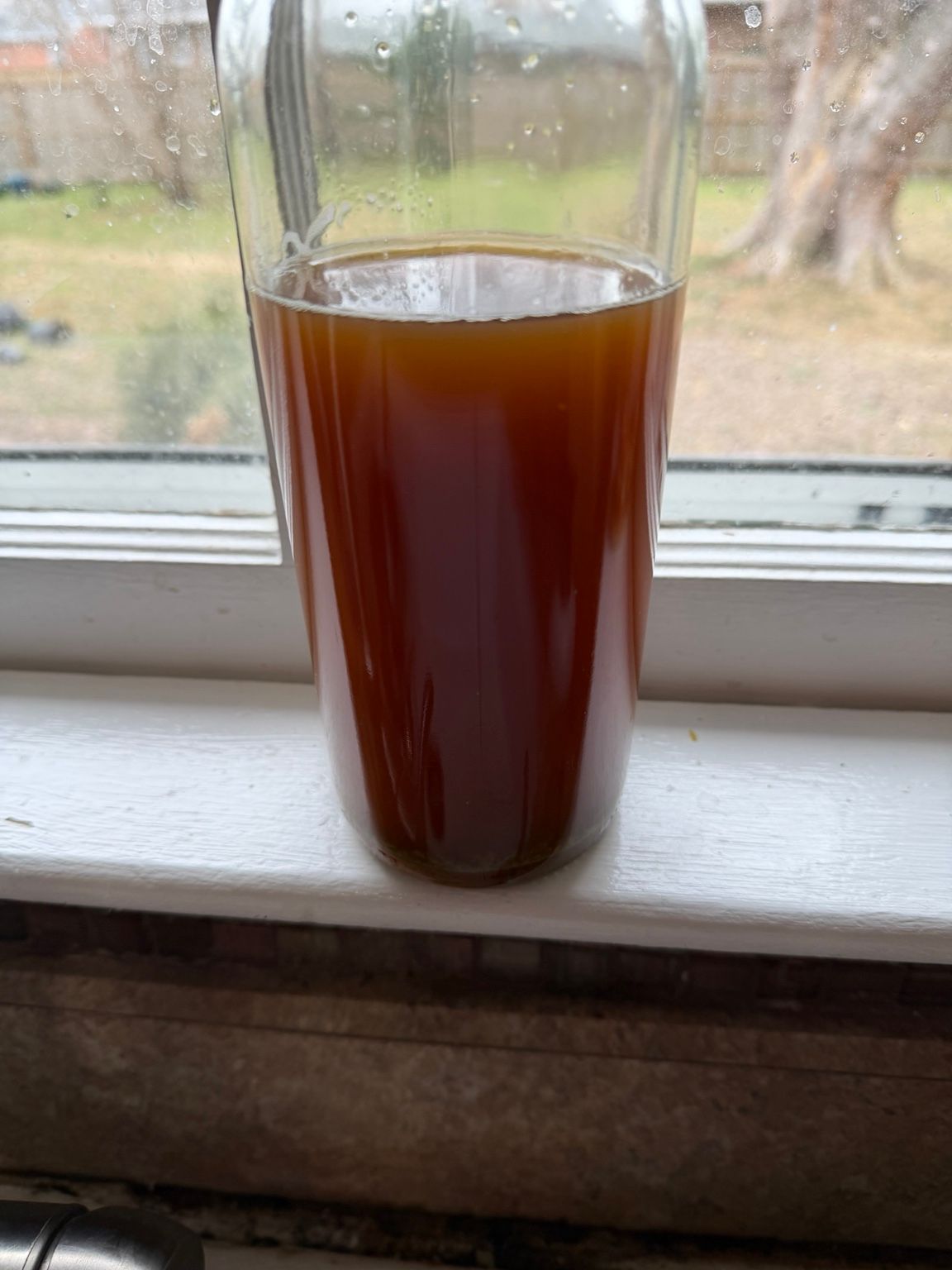
Brewed January 2026.
There is something satisfying about turning grain, malt extract, hops, and yeast into beer. There is also something humbling about discovering that the IPA you intended to brew tastes a little more like a stout.
Welcome to my latest homebrewing experiment: Copper Mosaic American IPA.
The plan was five gallons of a relatively strong, hop-forward American IPA, with citrus and tropical character from Mosaic hops and just enough malt complexity to keep things interesting. The result was a beer I recorded at 8.01% ABV, with a deep copper-brown color and a surprisingly smoky, bitter first taste.
Not exactly the plan, but that's part of the fun.
The Recipe
This was an extract brew with steeping grains, featuring Mosaic hops from boil to dry hop.
| Detail | Plan / result |
|---|---|
| Batch size | 5 gallons planned |
| Method | Dry malt extract with steeping grain |
| Malt extract | 8 lb CBW Golden Light DME |
| Specialty grain | 1.5 lb brown malt |
| Hops | 5 oz Mosaic total in the recipe |
| Yeast | White Labs American Ale Blend |
| Fermentation target | 65–70°F |
| Target ABV | Approximately 7.0–7.6% |
| Recorded ABV | 8.01% |
The hop schedule called for 1 oz with 10 minutes left in the boil, 1 oz with 1 minute left, 1 oz at flameout for a whirlpool, and two 1 oz dry-hop charges, spaced three days apart. Mosaic was meant to provide the bright, fruity personality.
As for the 1.5 pounds of brown malt, well, we'll come back to that.
Brew Day: Grain, Extract, and a Lot of Stirring
I heated five gallons of water to about 155°F, steeped the brown malt in a grain bag for 20–30 minutes, then removed the bag. The steep stayed roughly in the 150–160°F range.
I made one useful adjustment to the written instructions: split the eight pounds of DME into two additions. I dissolved half before the boil, off heat and with plenty of stirring, and saved the other half for flameout. The idea was to limit scorching and unnecessary darkening.
The boil lasted 30 minutes. Mosaic went in with 10 minutes remaining and again with 1 minute remaining. At flameout, I added the remaining DME, stirred thoroughly, and used the final ounce of kettle hops for a roughly 15–20 minute whirlpool.
Then came the less glamorous part: cooling the wort.
The Ice Bath Problem
Cooling a large kettle of hot wort without a wort chiller requires patience and an impressive amount of ice. My notes for next time are unambiguous: get a bigger cooling tub and plan for at least two 20-pound bags of ice. A large galvanized utility tub might do the trick as an outer ice bath.
Once the wort cooled to yeast-pitching temperature, I transferred it into the fermenter, aerated it, and pitched the yeast.
Fermentation: The Yeast Had Other Plans
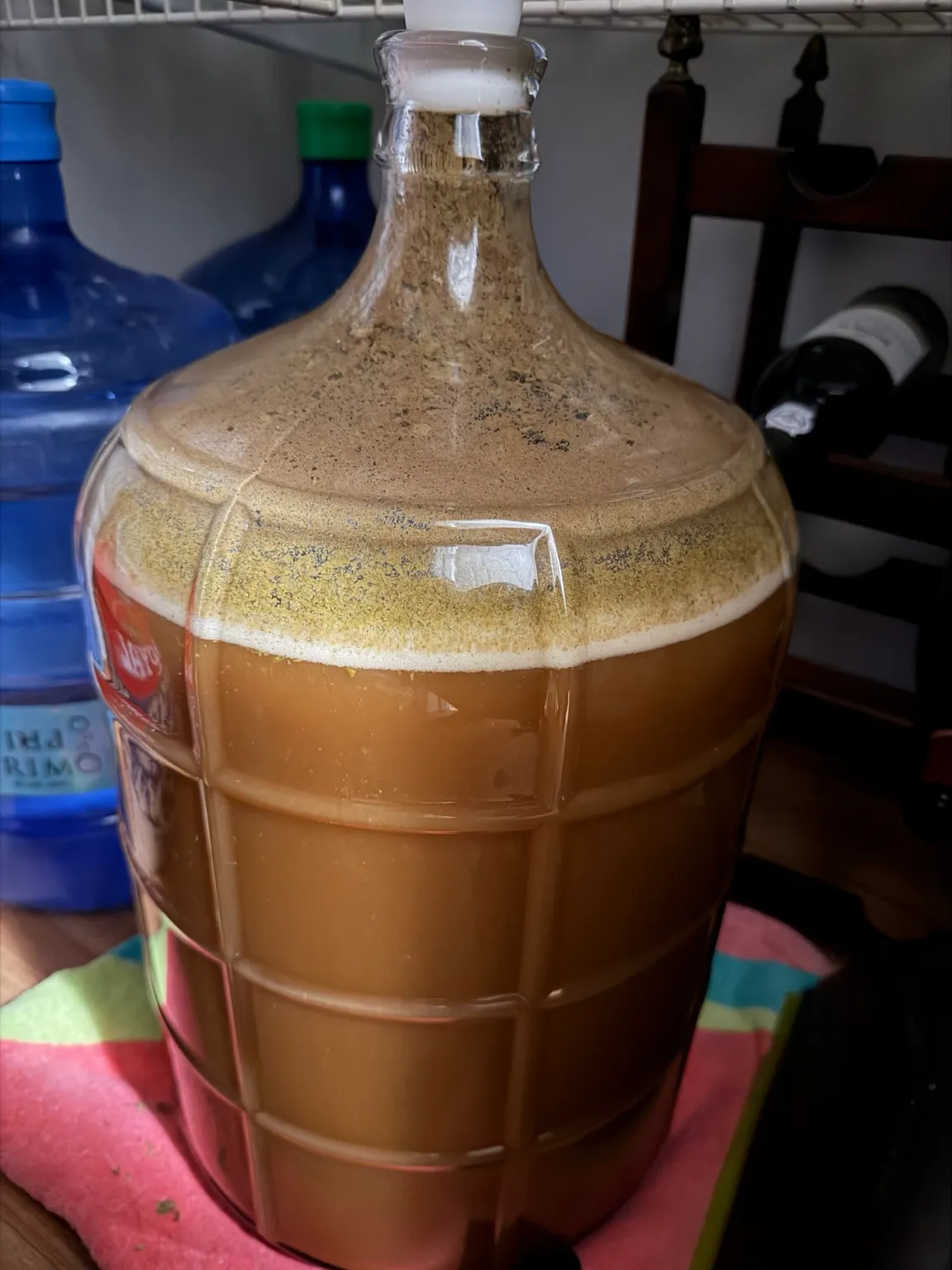
At 18–24 hours, there were bubbles and visible krausen. By about 48 hours, the airlock was bubbling vigorously and overflowing. The yeast apparently had no interest in a quiet, dignified fermentation.
The carboy developed a formidable krausen ring, and the beer stayed hazy while fermentation was underway.
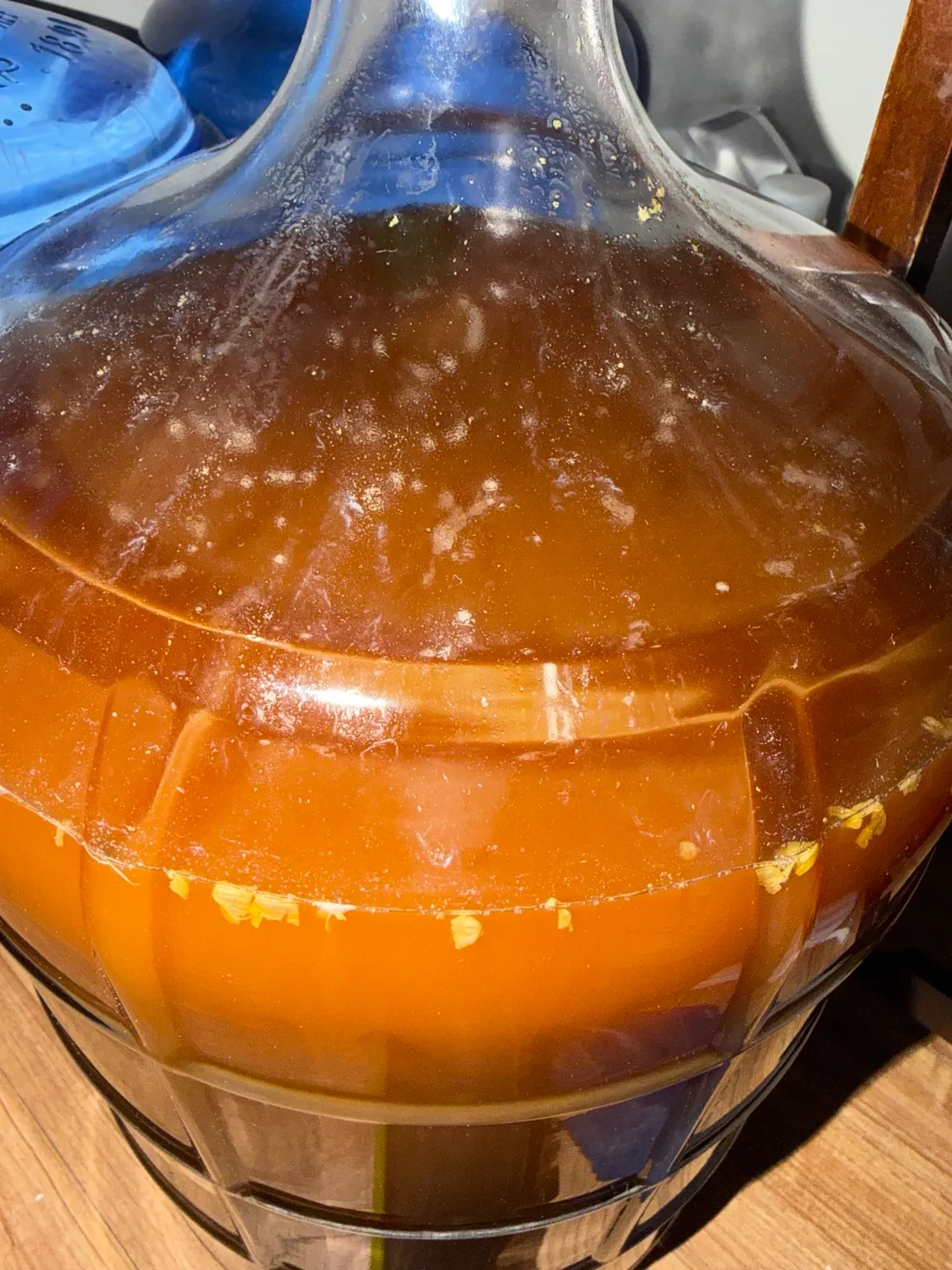
On January 22, 2026, I added a dry-hop charge, sanitized around the carboy opening, cleaned the stopper and airlock, and resealed everything. On January 23, there was still steady bubbling, but less mess, and it smelled like beer. Always a reassuring sign.
The recipe planned a second dry-hop charge three days after the first. My handwritten log confirms the January 22 addition but does not separately document the second charge, so I'm leaving that as part of the recipe rather than claiming a confirmed date.
One lesson: keep the fermenter closed as much as possible. Oxygen is particularly unhelpful when trying to preserve fresh hop aroma.
Bottling Day: Twenty Pints of Experimental Beer
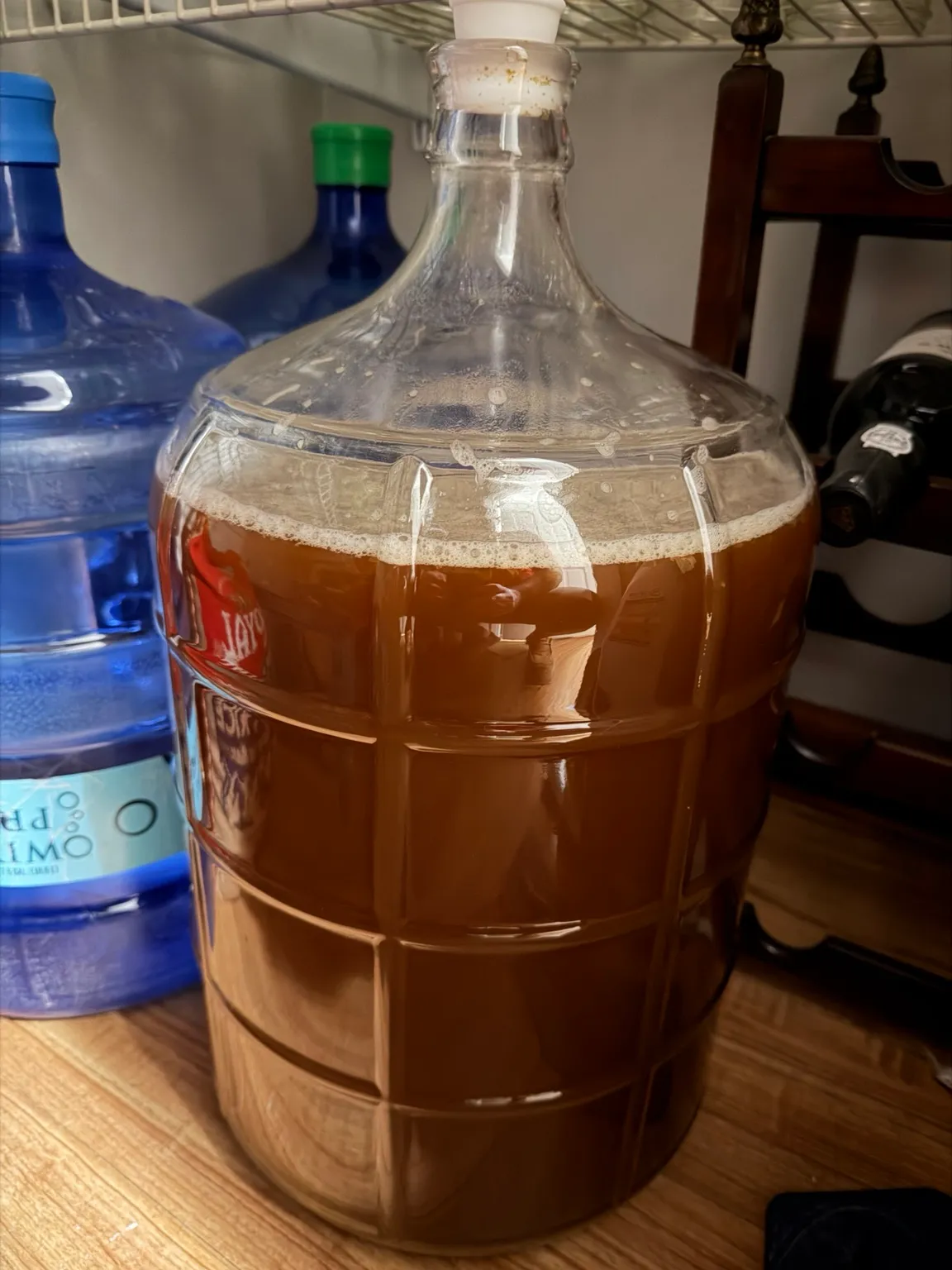
On January 31, 2026, I bottled 20 pints, about 2.5 gallons, according to my notes. That is well below the five-gallon target. I didn't record enough intermediate volume measurements to say exactly where the difference occurred, so that's a process improvement for next time.
The recorded alcohol content was 8.01% ABV. The color was deep copper-brown rather than the brighter IPA I had pictured.
And then came the tasting note:
“Smoky, bitter. Tastes like a stout.”
Not exactly a glowing endorsement of my IPA recipe, but certainly memorable.
This was a bottling-day impression, not a documented tasting after bottle conditioning. Young, uncarbonated beer can change noticeably as it conditions, so I'm not going to pretend that one taste tells the whole story.
What Probably Happened?
The 1.5 pounds of brown malt is my first suspect. Brown malt can bring toasty, dry, roasted notes, and this was a substantial addition for a beer intended to showcase bright Mosaic hop character. It also helps explain the darker color.
Scorching or excess heat exposure during extract additions is another possibility, although splitting the DME was intended to reduce that risk. I don't have enough evidence to assign a definitive cause to the smoky note.
And the perceived bitterness may have been more assertive in the young beer than it would be after conditioning. There are a few variables to untangle before I try this recipe again.
Lessons for the Next Batch
Go lighter on the specialty malt. I'd sharply reduce or remove the brown malt for a brighter American IPA and let the Mosaic hops do the talking.
Improve the cooling setup. A larger ice bath is the short-term fix. An immersion chiller is the longer-term upgrade. I'd rather spend less time waiting for hot wort to cool.
Measure volumes at each stage. Pre-boil, post-boil, into the fermenter, and into the bottling bucket. That should explain how a planned five-gallon batch turned into 20 bottled pints.
Use a blowoff tube early. The overflowing airlock was entertaining exactly once.
Keep better gravity and tasting records. Original gravity, final gravity, temperature, and tasting notes after conditioning would make it much easier to understand the result. My 8.01% figure is in the notes, but the underlying gravity readings aren't.
Final Thoughts
Copper Mosaic IPA was a lively fermentation, a stronger-than-planned beer, and a lesson in how much one ingredient can change the direction of a recipe.
Homebrewing is part cooking, part chemistry, part biology, and part figuring out why your kitchen suddenly smells like a brewery. Sometimes you make exactly the beer you intended. Sometimes you aim for a fruity American IPA and end up with something that tastes suspiciously like a stout.
Either way, you learn something.
Next batch: lighter malt, faster cooling, better measurements, and hopefully a little more Mosaic in the glass.